XR Emergency Training for Military Fast Jets

The XR Emergency Training project focuses on the evaluation of immersive training methods for emergency procedures in military aviation. By combining extended reality (XR) simulations with psychophysiological measurements such as EEG, ECG, and EDA, the project aims to assess stress, cognitive load, and user experience in high-stakes training scenarios. The goal is to identify both technological and human factors that influence training effectiveness and to support the development of adaptive, evidence-based training environments that enhance operational performance and flight safety.
- Funders German Air Force
- Funding program Training Optimization Program
- Funding amount 0.15 Million Euro
- Duration 2024–2025
Funding

Partners

Team
- Prof. Dr.-Ing. Jan-Niklas Voigt-Antons
Project Lead - Julia Schorlemmer
Research Scientist
XR Emergency Training for Fast-Jet Pilots
The project investigates the use of Extended Reality technologies (Virtual and Mixed Reality) in training emergency procedures for fast-jet pilots. The goal is to develop realistic and immersive training environments that improve responsiveness in critical situations and contribute to flight safety in the long term.
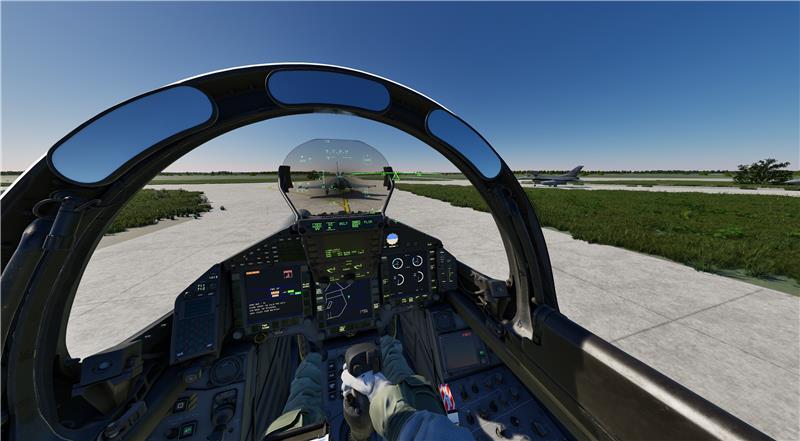
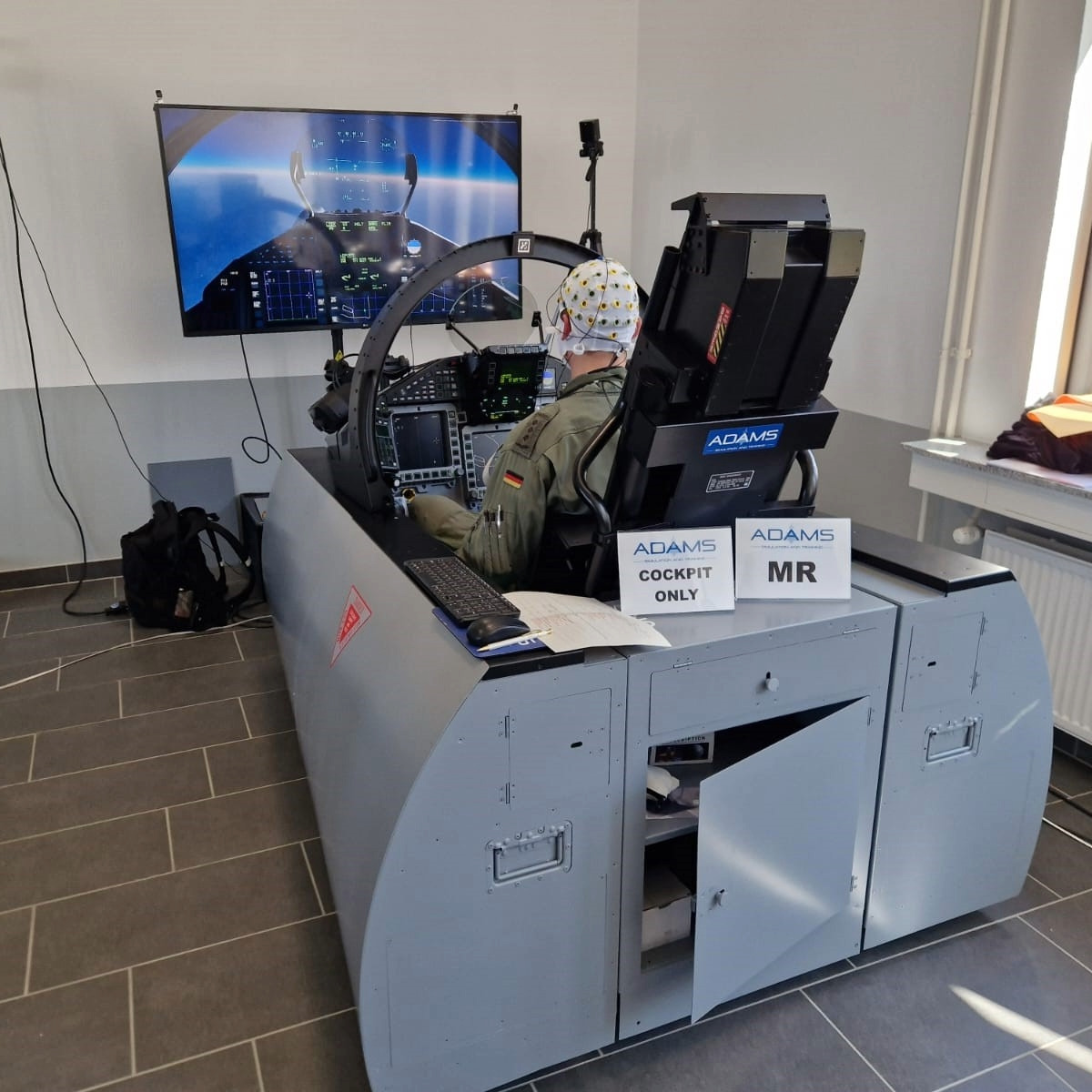
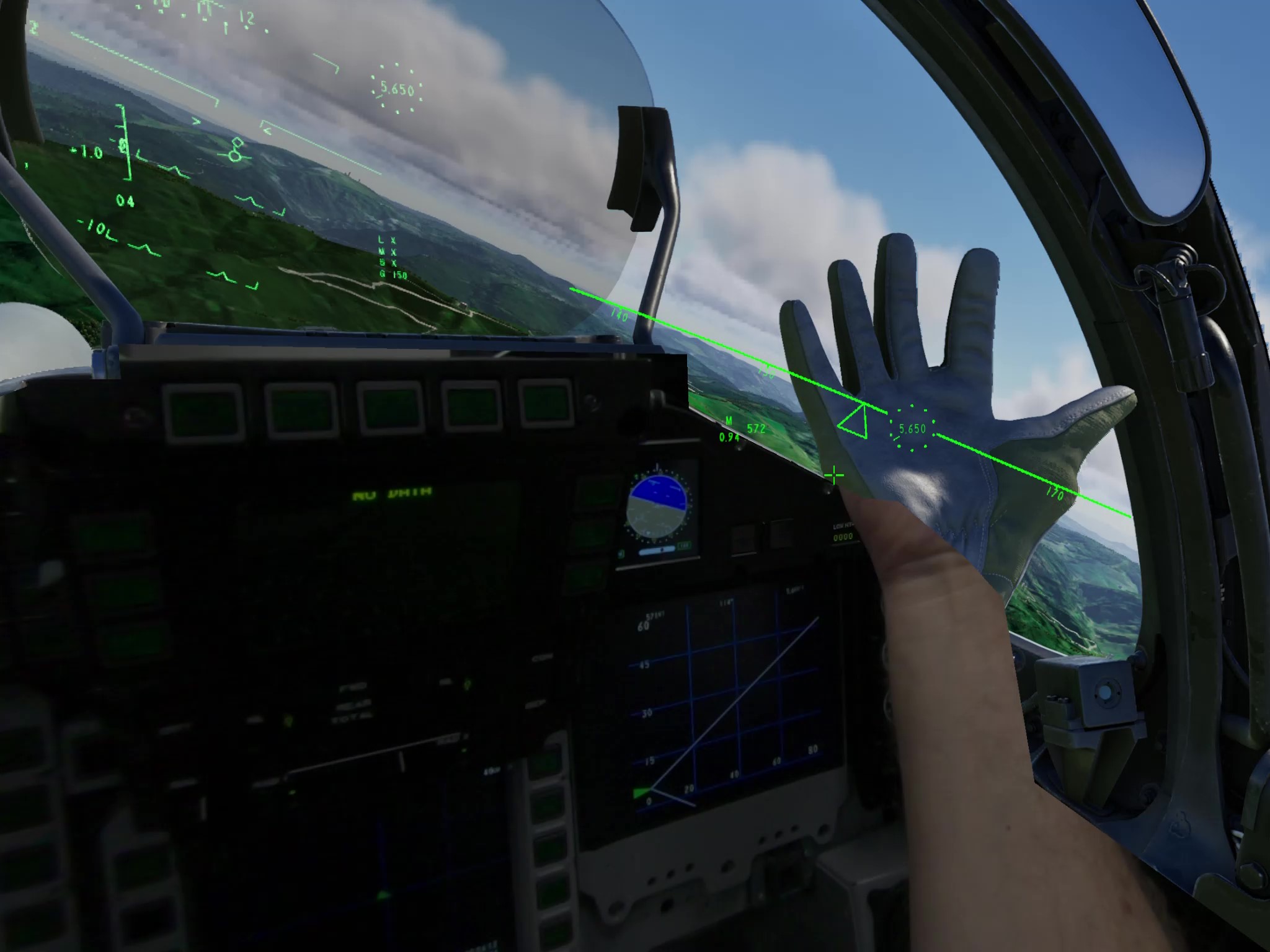
In an experimental study, different training methods – paper-based, cockpit-only, virtual reality, and mixed reality – are compared. In addition to subjective evaluations of user experience, presence, and workload, physiological parameters such as EEG, HRV, and EDA are recorded to objectively measure cognitive and emotional strain.
The results show that immersive training – especially in mixed reality – leads to higher perceived realism, stronger involvement, and more efficient learning processes. In the long term, the findings aim to support the targeted enhancement and further development of traditional paper-based methods through interactive, evidence-based training forms.
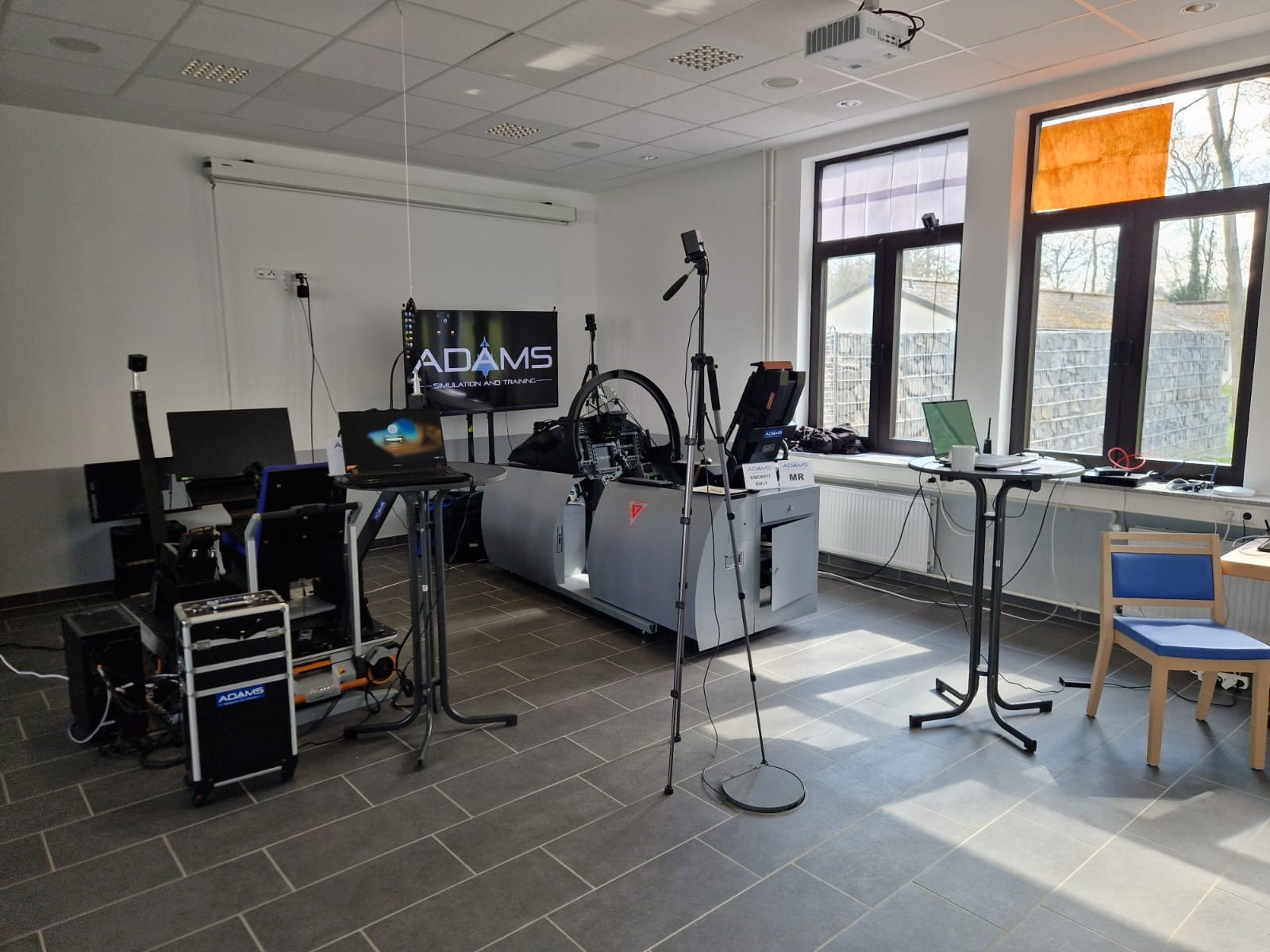
Cockpit-Only Condition
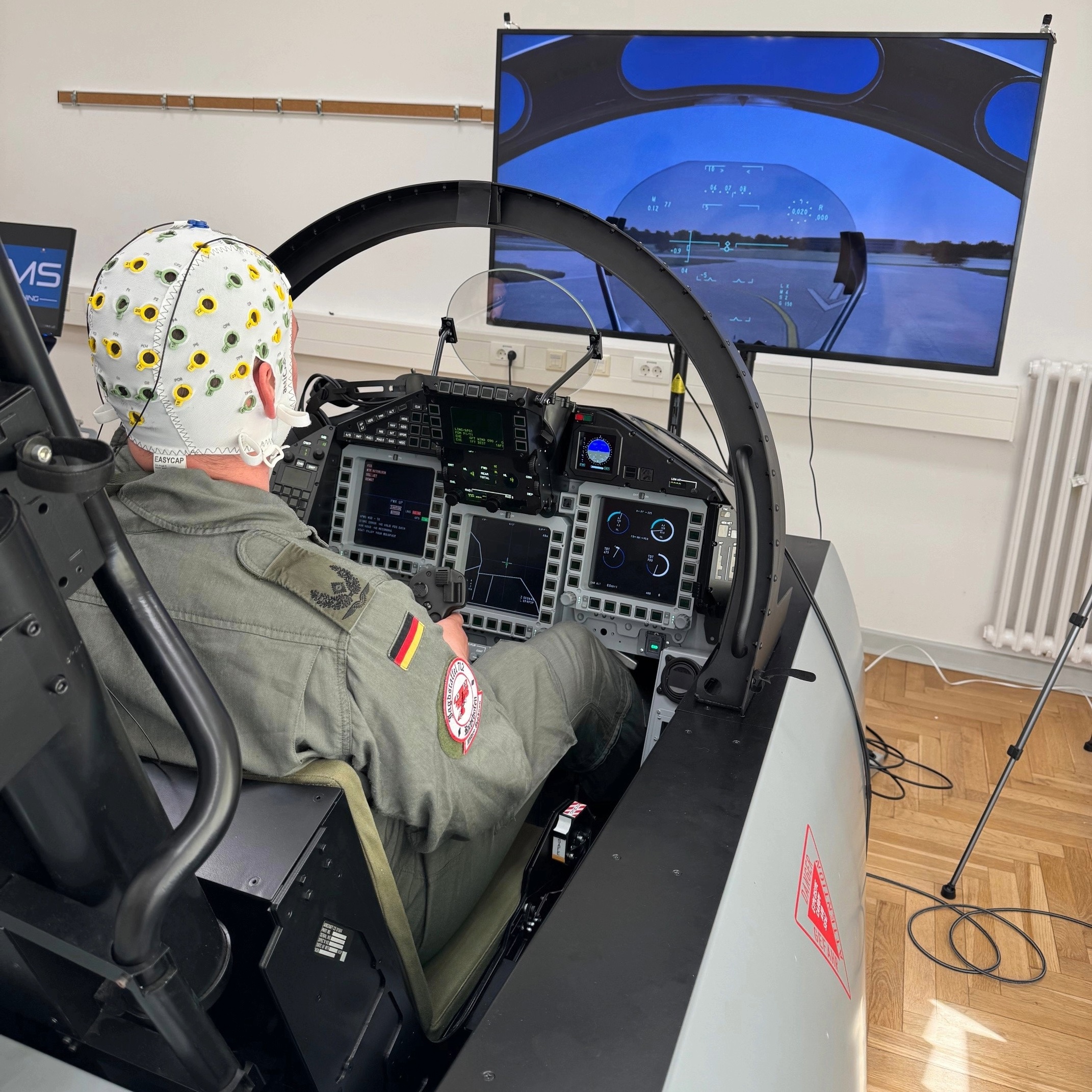
Virtual Reality Condition
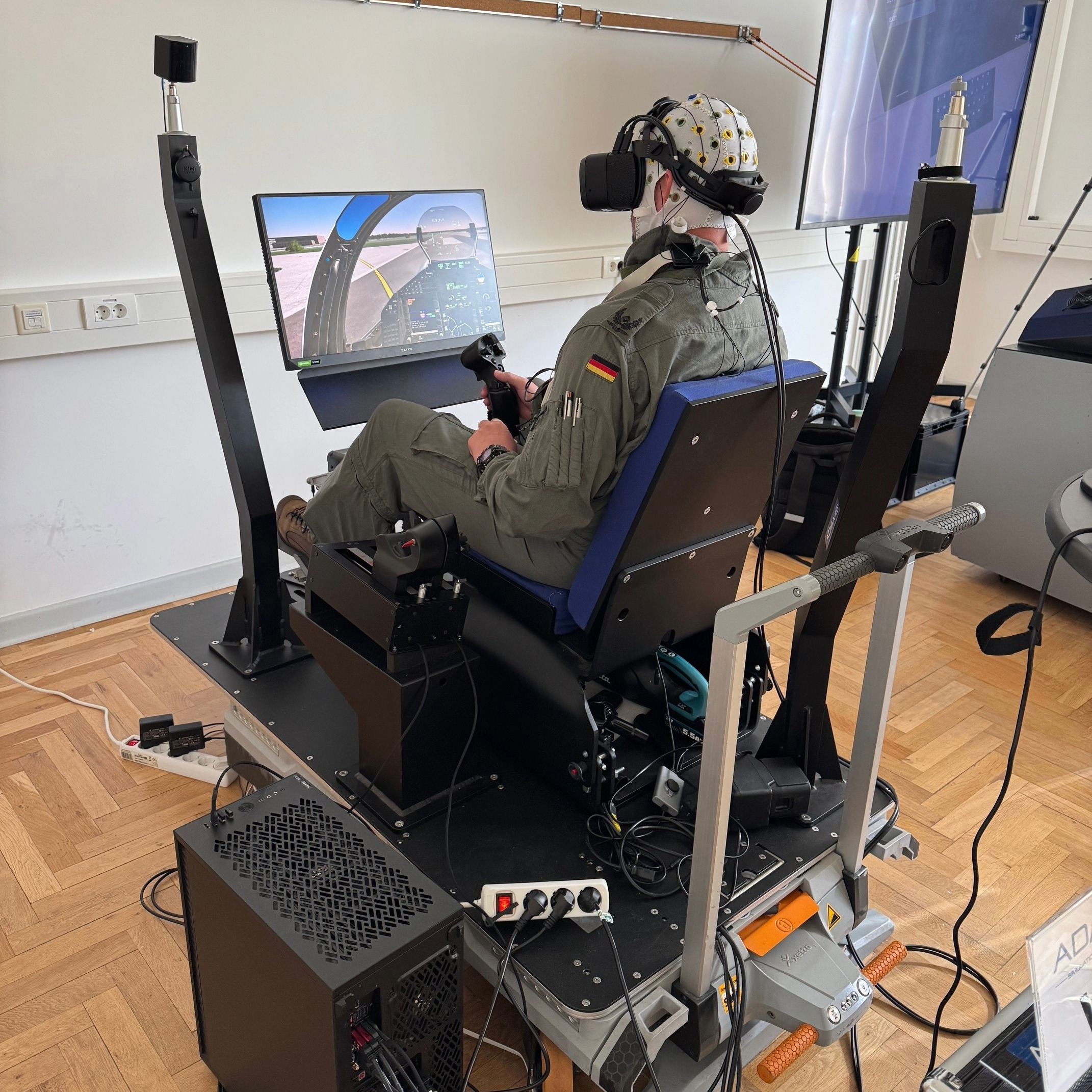
Mixed Reality Condition
Publications
- Psychophysiology-based QoE Assessment: A Survey
Engelke, U., Darcy, D. P., Mulliken, G. H., Bosse, S., Martini, M.G., Arndt, S., Antons, J.-N., Chan, K. Y., Ramzan, N. & Brunnström, K. (2017). Psychophysiology-based QoE Assessment: A Survey. Journal of Selected Topics in Signal Processing, 11, 6-21. https://doi.org/10.1109/JSTSP.2016.2609843 - Neural correlates of speech quality dimensions analyzed using electroencephalography (EEG)
Uhrig, S., Mittag, G., Möller, S. & Voigt-Antons, J.-N. (2019). Neural correlates of speech quality dimensions analyzed using electroencephalography (EEG). Journal of Neural Engineering, 16(3). https://doi.org/10.1088/1741-2552/aaf122 - Real-time affect detection in virtual reality: a technique based on a three-dimensional model of affect and EEG signals
Pinilla, A., Voigt-Antons, J.-N., Garcia, J. A., Raffe, W. & Möller, S. (2023). Real-time affect detection in virtual reality: a technique based on a three-dimensional model of affect and EEG signals. Front. Virtual Real. 3:964754. https://doi.org/10.3389/frvir.2022.964754 - Using Physiological Data for Assessing Variations of the Cognitive State Evoked by Quality Profiles
Antons, J.-N. & Möller, S. (2013, December). Using Physiological Data for Assessing Variations of the Cognitive State Evoked by Quality Profiles. Contribution presented to the ITU-T SG12. https://www.itu.int/md/T13-SG12-C-0103/en