
Francesco Vona, PhD
Senior Research Scientist
Francesco Vona, Master’s degree and Ph.D. in Computer Science and Engineering, is a Postdoc researcher at the University of Applied Sciences Hamm-Lippstadt and an external researcher at the Department of Electronics, Information, and Bioengineering at the Politecnico di Milano. His current research focuses on the study of conditions that can alter the acceptance and effectiveness of Extended Reality (XR) applications from a user perspective.
Research interests:
- Human Computer Interaction
- Extended Reality (XR)
- User Experience
- Bio Sensors
Contact: +49 (0)2381 8789-971 · francesco.vona@hshl.de
My Publications
All
Book/Chapter
Journal
Conference
Standards
 Using Immersive Technologies to support healthcare of elderly and fragile people
 The Three-Body Problem of Collaboration: Effects of Asymmetric Physical Co-Presence in Augmented Reality
 User Experience and Socioemotional Evaluation of Virtual Therapist Character Types in a Simulated Virtual Reality Exposure Therapy: Quantitative Study
 Hearing the Way: Influence of Varying Spatialized Audio Cues and Device Type on AR Navigation Experience
 Interactive digital twins enabling responsible extended reality applications
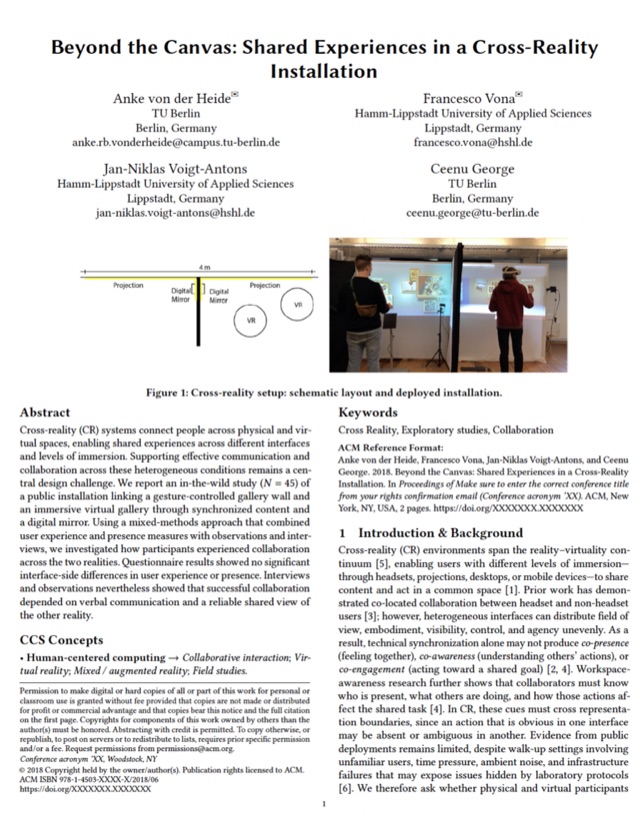 Beyond the Canvas: Shared Experiences in a Cross-Reality Installation
 Localized ARCADE: Backend Optimization and Systematic UX Evaluation of Personalized Conversational MetaHuman Avatars in Human-Scale Immersive Environments
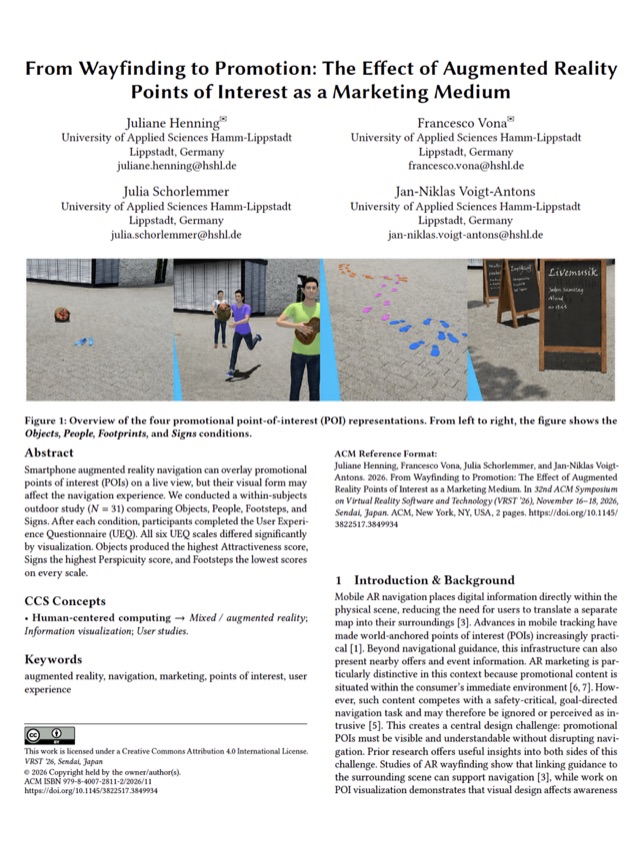 From Wayfinding to Promotion: The Effect of Augmented Reality Points of Interest as a Marketing Medium
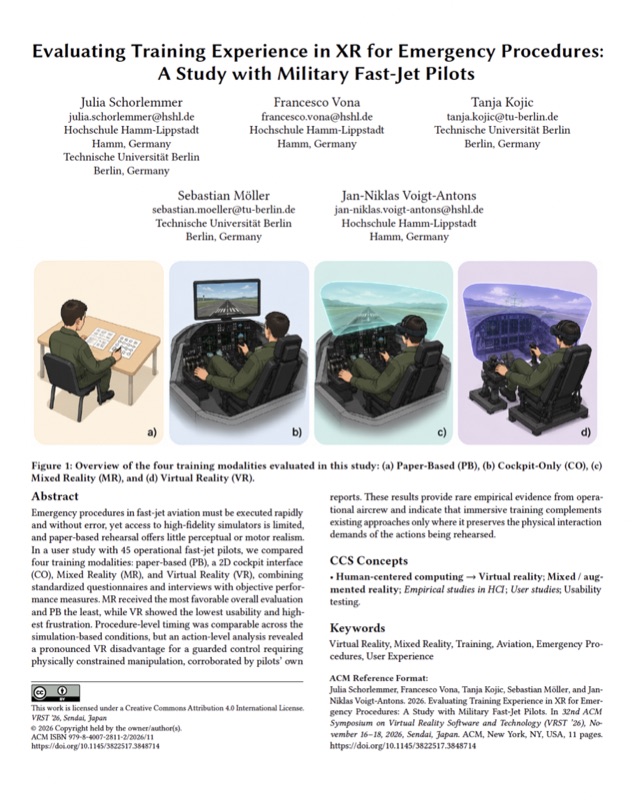 Evaluating Training Experience in XR for Emergency Procedures: A Study with Military Fast-Jet Pilots
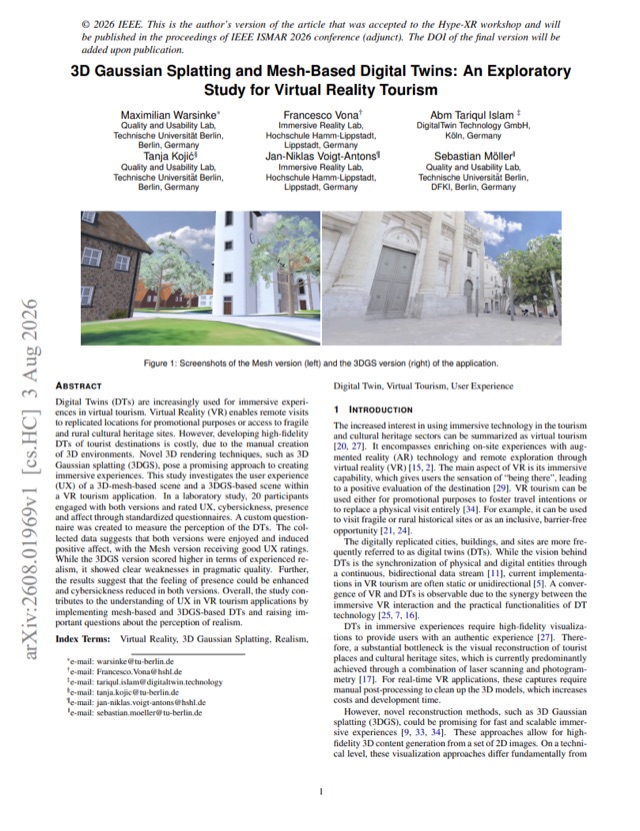 3D Gaussian Splatting and Mesh-Based Digital Twins: An Exploratory Study for Virtual Reality Tourism
 Experiencing the Path: Comparing Visual Cues for User Experience and Performance in Outdoor Augmented Reality Navigation
 How Close Is Too Close? Exploring the Impact of Avatar Proximity on User Experience in Collaborative Augmented and Virtual Reality
 Unmanned Aerial Vehicles Control in a Digital Twin: Exploring the Effect of Different Points of View on User Experience in Virtual Reality
 Finding My Way: Influence of Different Audio Augmented Reality Navigation Cues on User Experience and Subjective Usefulness
 Augmented Reality in the Treatment of Stress and Anxiety Disorders: A Literature Synthesis
 Emotionally Adaptive Virtual Health Assistants for Enhanced Social Presence and Trust
 The Impact of Spatial Misalignment and Time Delay on Collaborative Presence in Augmented Reality
 Size Matters: The Impact of Avatar Size on User Experience in Healthcare Applications
 Digital Twins for Extended Reality Tourism: User Experience Evaluation Across User Groups
 Hands vs. Controllers: Comparing User Interactions in Virtual Reality Shopping Environments
 Comparing Pass-Through Quality of Mixed Reality Devices: A User Experience Study During Real-World Tasks
 User-Centric Evaluation Methods for Digital Twin Applications in Extended Reality
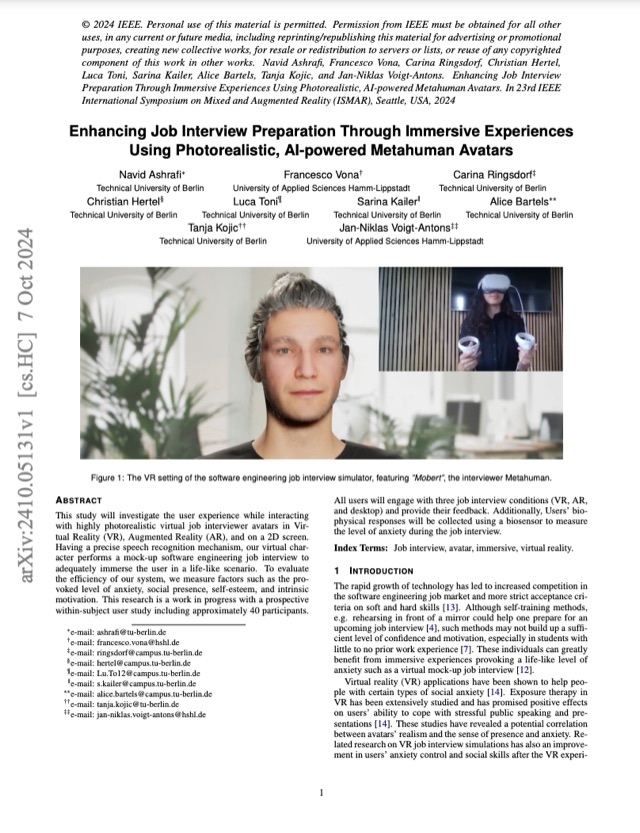 Enhancing Job Interview Preparation Through Immersive Experiences Using Photorealistic, AI-powered Metahuman Avatars
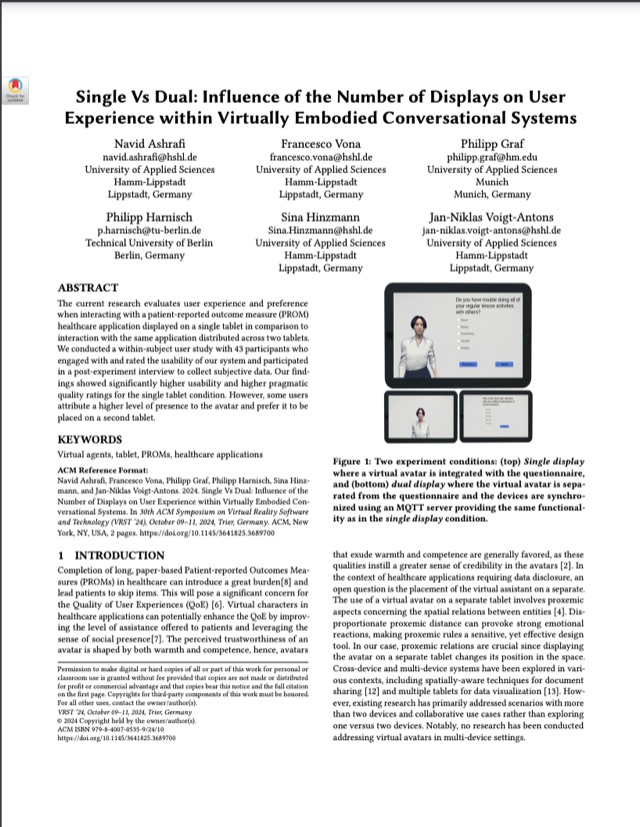 Single Vs Dual: Influence of the Number of Displays on User Experience Within Virtually Embodied Conversational Systems
 Investigating the impact of virtual element misalignment in collaborative Augmented Reality experiences
 The Impact of Social Environment and Interaction Focus on User Experience and Social Acceptability of an Augmented Reality Game
 Exploring users' sense of safety in public using an Augmented Reality application
 An Investigation of the Influence of Ambient Noise on User Experience in Virtual Reality
 Influence of Interactivity and Social Environments on User Experience and Social Acceptability in Virtual Reality
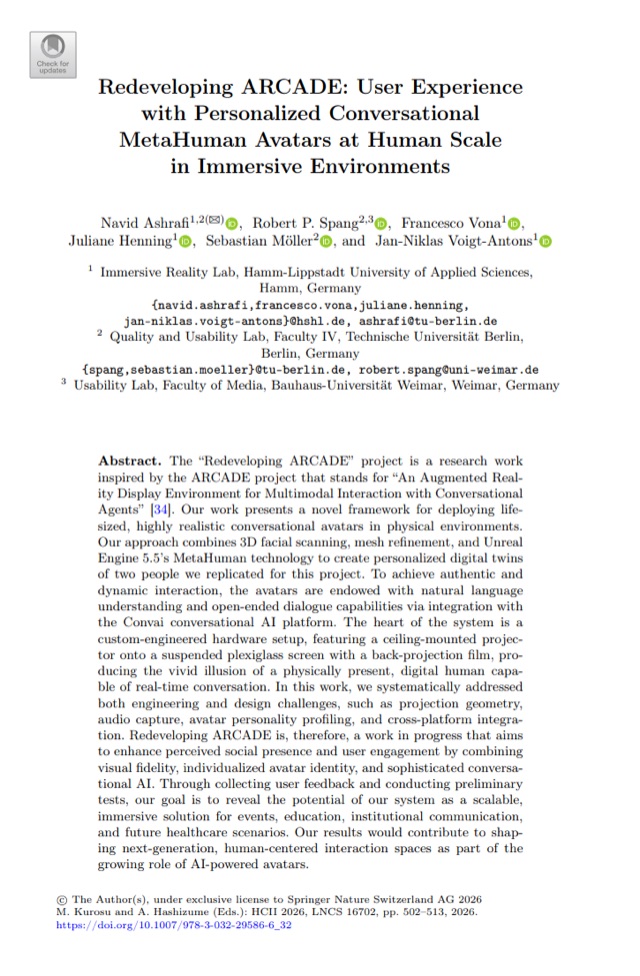 Redeveloping ARCADE: User Experience with Personalized Conversational MetaHuman Avatars at Human Scale in Immersive Environments
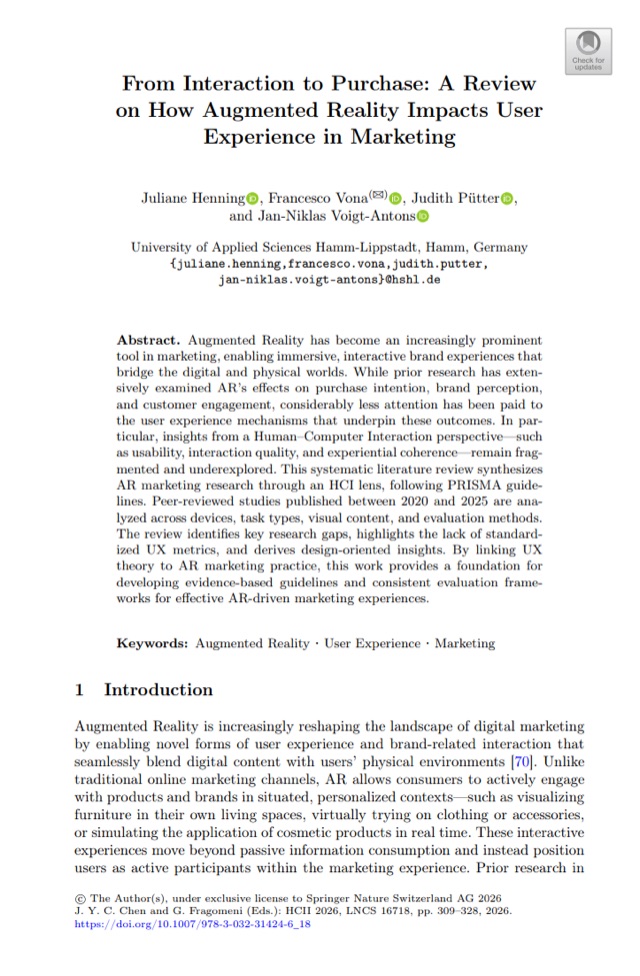 From Interaction to Purchase: A Review on How Augmented Reality Impacts User Experience in Marketing
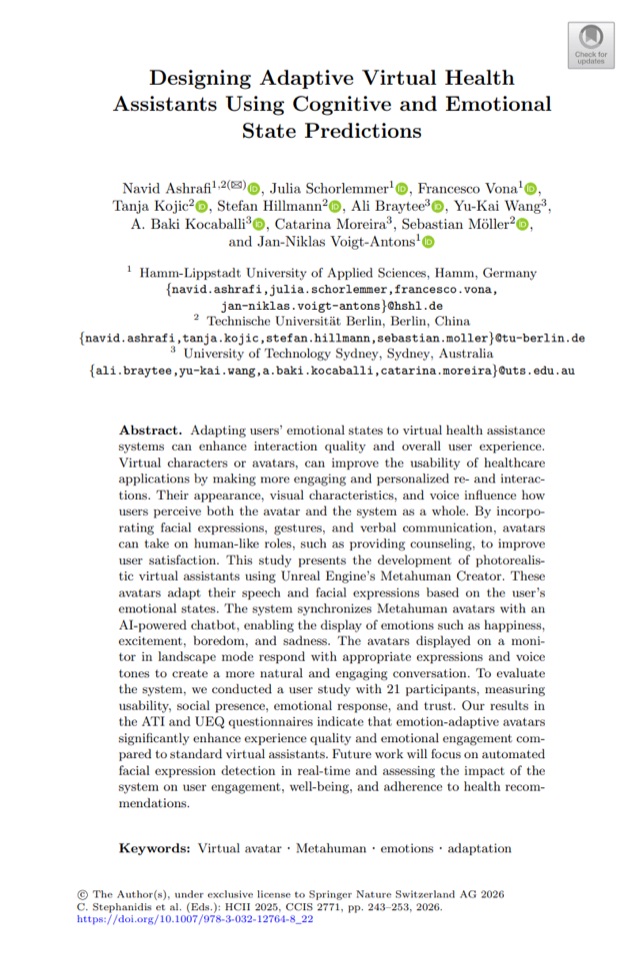 Designing Adaptive Virtual Health Assistants Using Cognitive and Emotional State Predictions
 Comparing User Behavior in Real vs. Virtual Supermarket Shelves: An Eye-Tracking Study Using Tobii 3 Pro and Meta Quest Pro
 Enabling Sustainable Everyday Mobility: The Role of E-Cargo Bikes in Urban and Rural Contexts
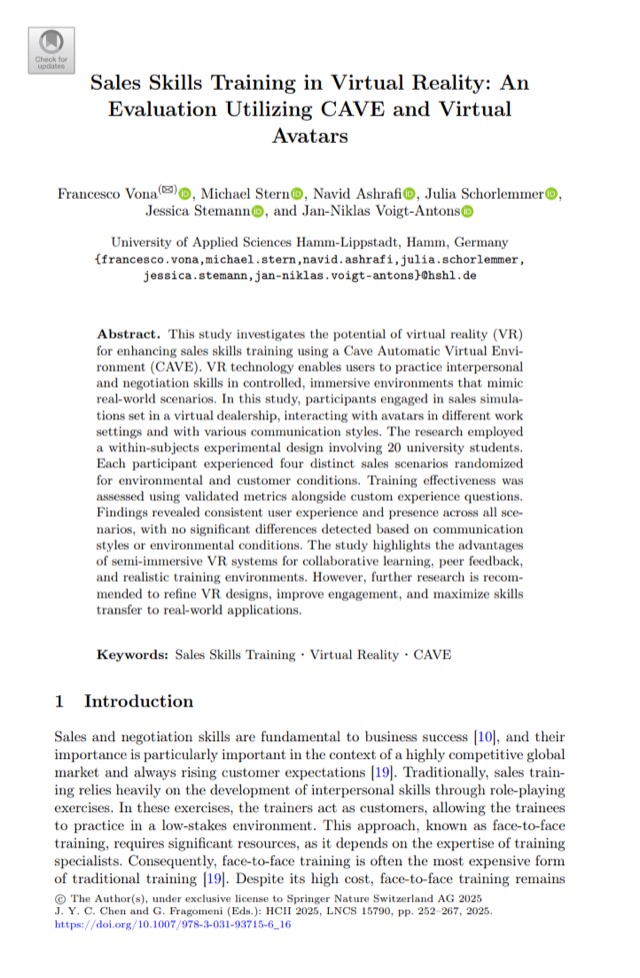 Sales Skill Training in Virtual Reality: An evaluation utilizing CAVE and Virtual Avatars
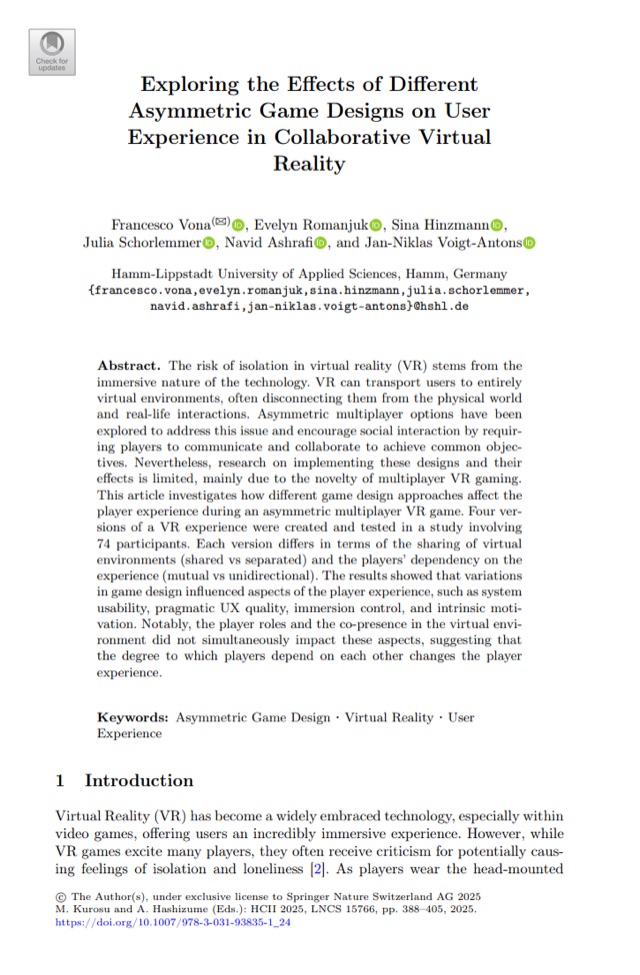 Exploring the Effects of Different Asymmetric Game Designs on User Experience in Collaborative Virtual Reality
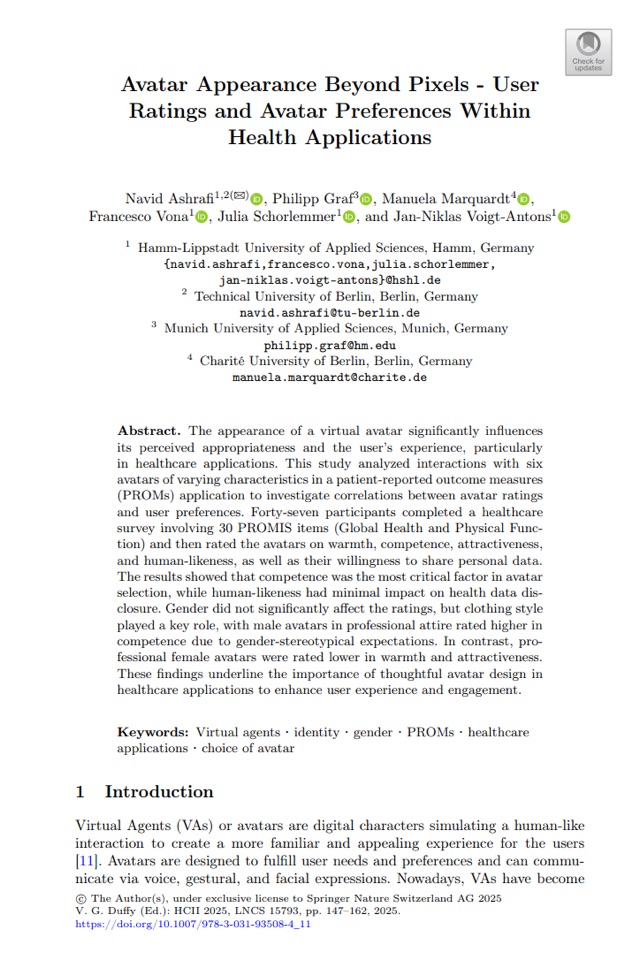 Avatar Appearance Beyond Pixels - User Ratings and Avatar Preferences within Health Applications
 Infrastructure Optimization for Predictive Maintenance: Enhanced Backend and Artificial Intelligence Integration
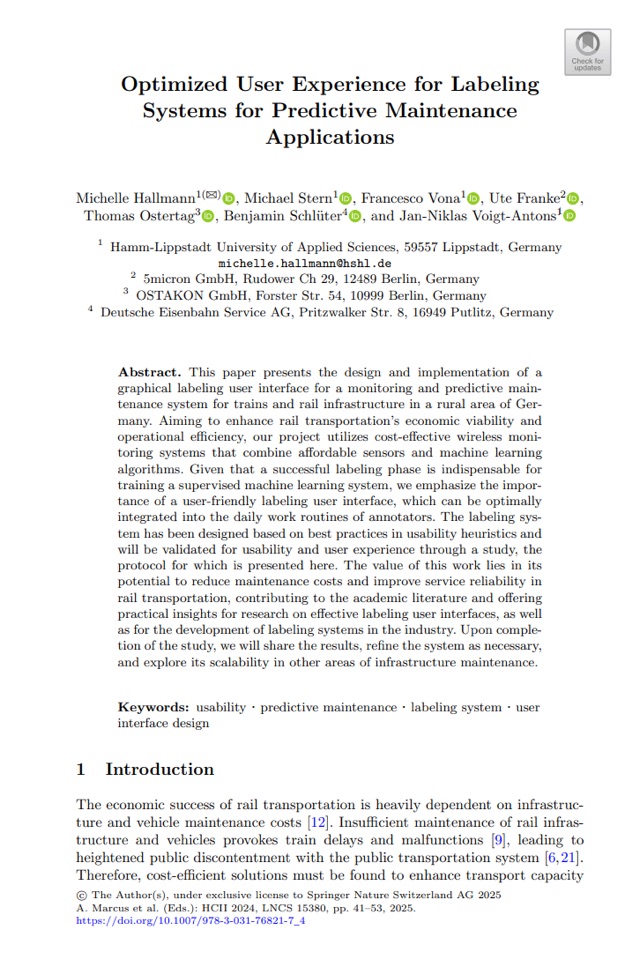 Optimized User Experience for Labeling Systems for Predictive Maintenance Applications
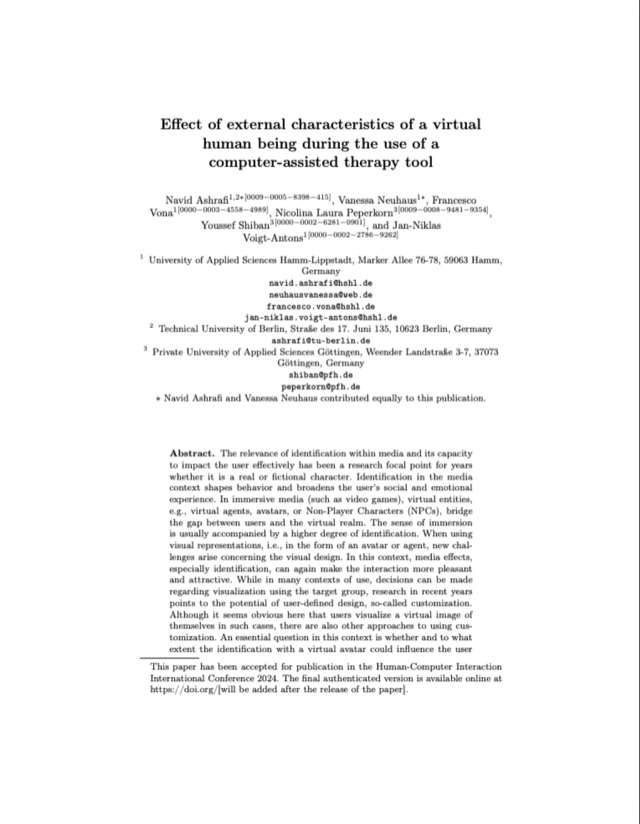 Effect of external characteristics of a virtual human being during the use of a computer-assisted therapy tool
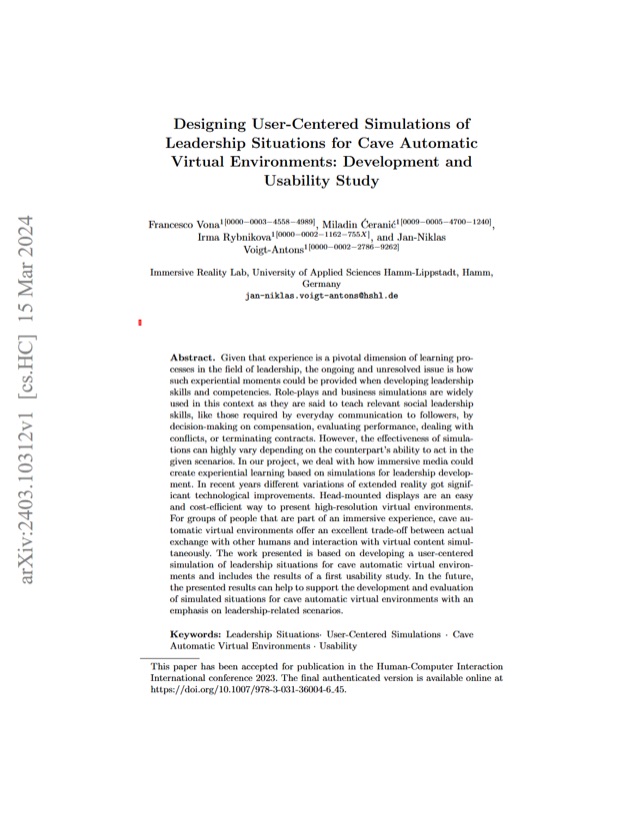 Designing User-Centered Simulations of Leadership Situations for Cave Automatic Virtual Environments: Development and Usability Study
 Impact of spatial auditory navigation on user experience during augmented outdoor navigation tasks
 Use cases and MPEG technologies for Metaverse-related experiences
 HoloLearn: Wearable mixed reality for people with neurodevelopmental disorders (NDD)
 HoloLearn: Learning through mixed reality for people with cognitive disability
 Exploring the potential of speech-based virtual assistants in mixed reality applications for people with cognitive disabilities
 Trusted artifact-driven process monitoring of multi-party business processes with blockchain
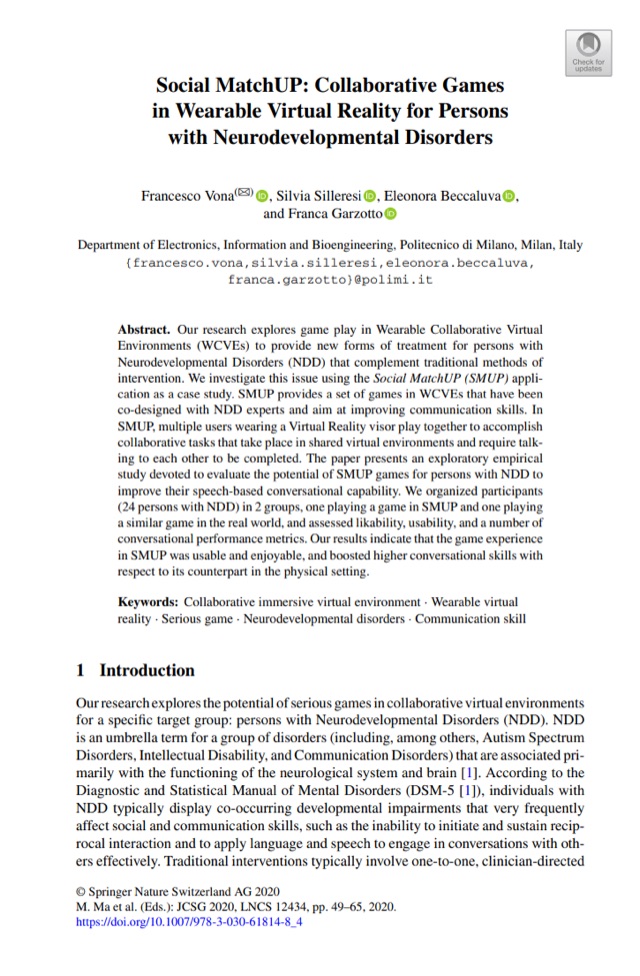 Social matchup: Collaborative games in wearable virtual reality for persons with neurodevelopmental disorders
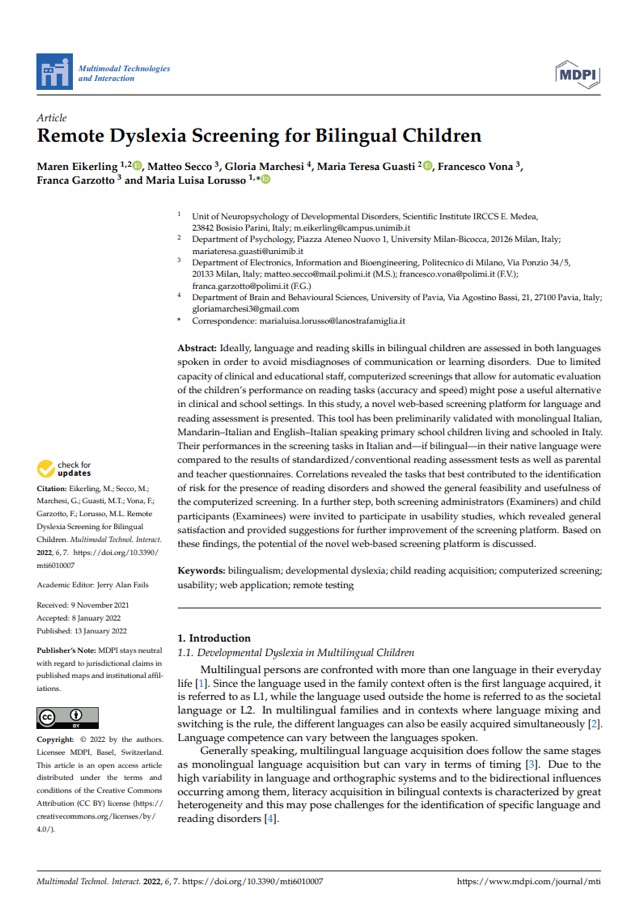 Remote dyslexia screening for bilingual children
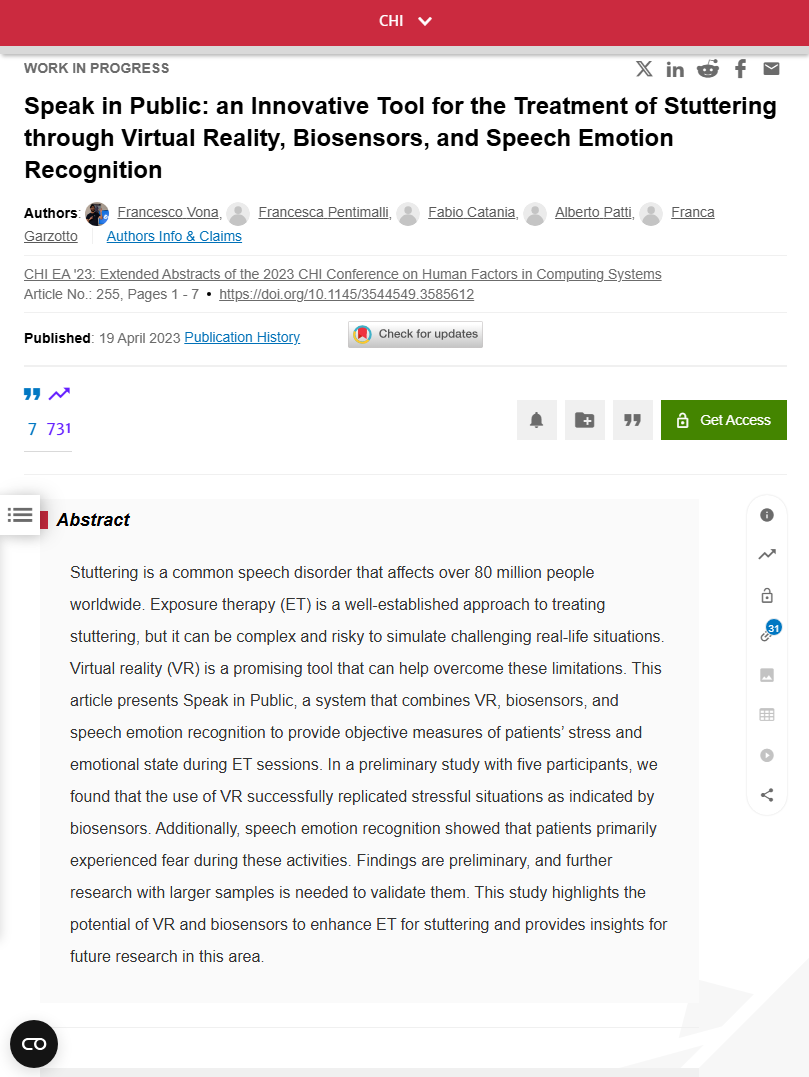 Speak in public: an innovative tool for the treatment of stuttering through virtual reality, biosensors, and speech emotion recognition
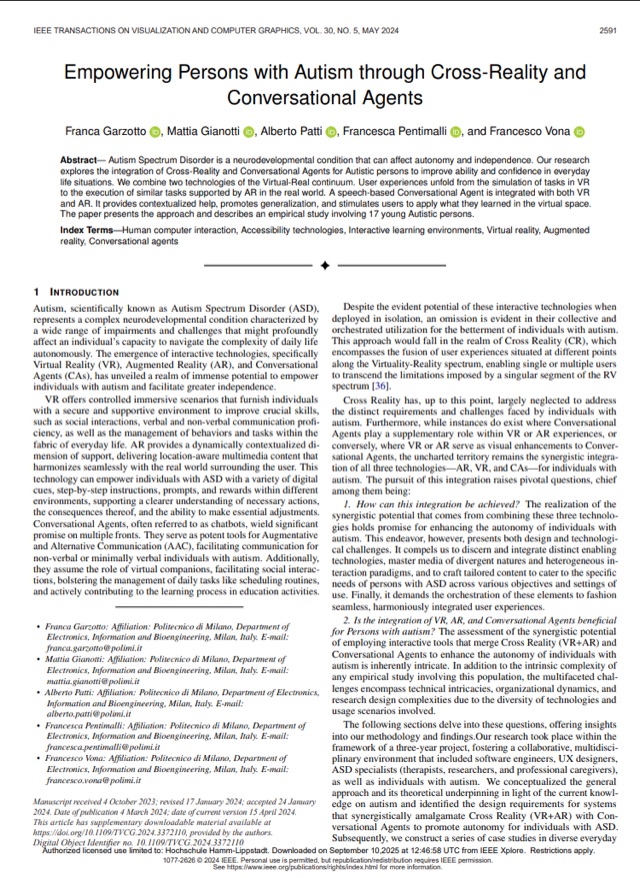 Empowering persons with autism through cross-reality and conversational agents
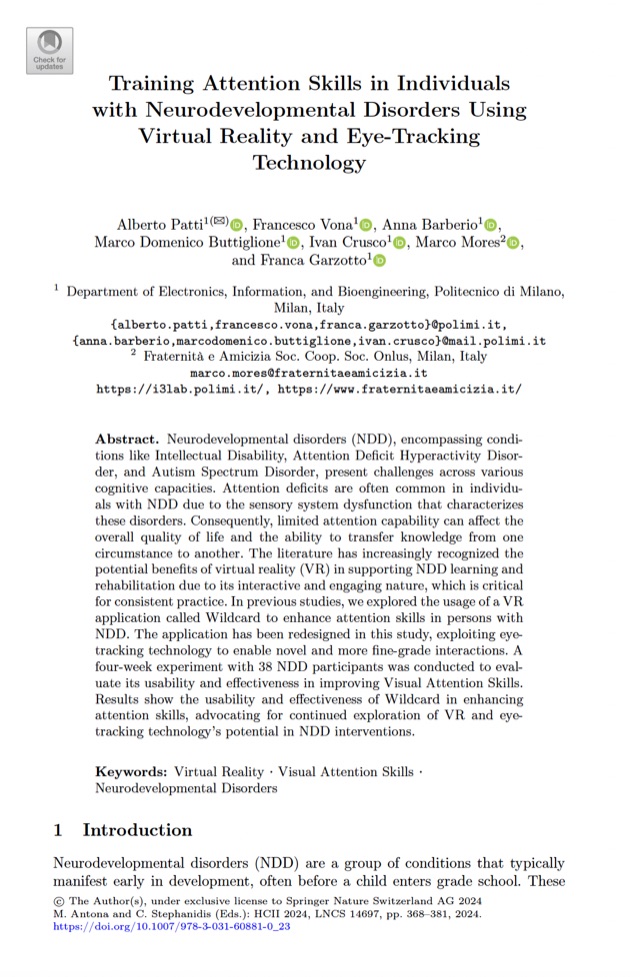 Training attention skills in individuals with neurodevelopmental disorders using virtual reality and eye-tracking technology
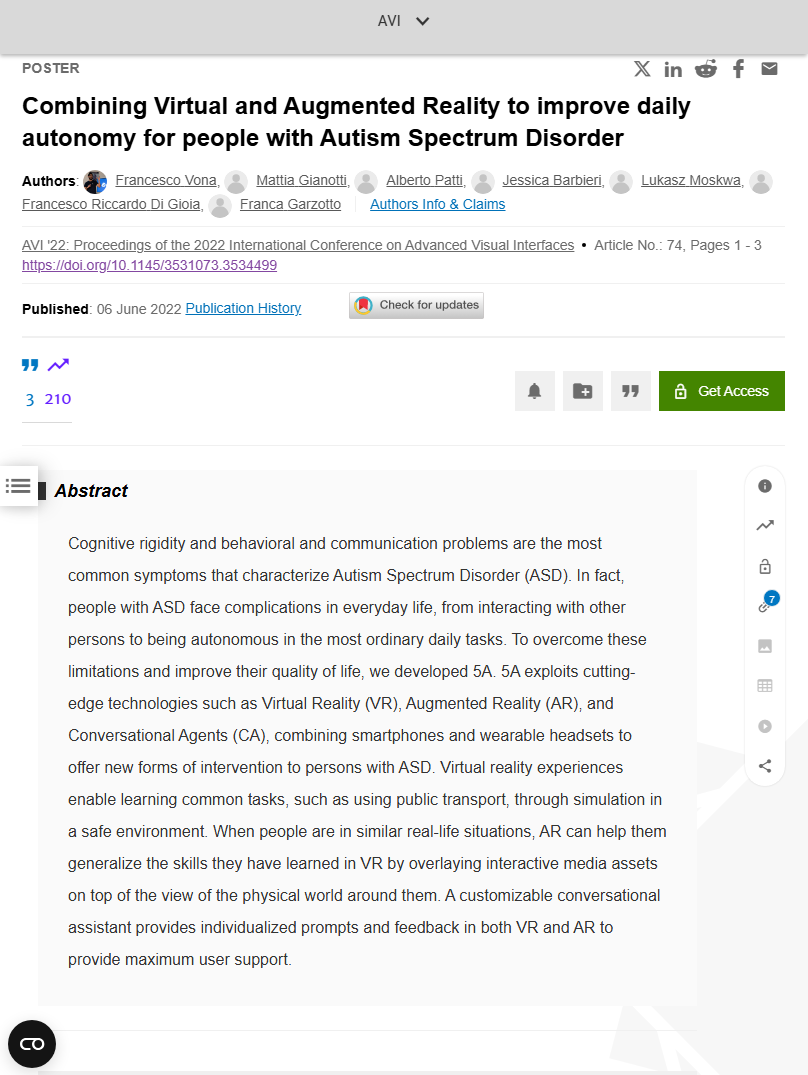 Combining Virtual and Augmented Reality to improve daily autonomy for people with Autism Spectrum Disorder
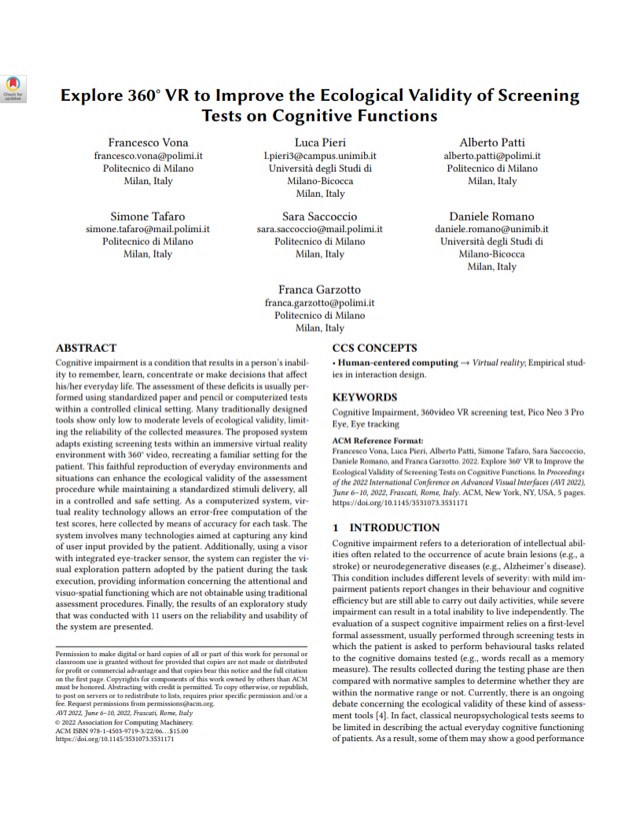 Explore 360 VR to improve the ecological validity of screening tests on cognitive functions
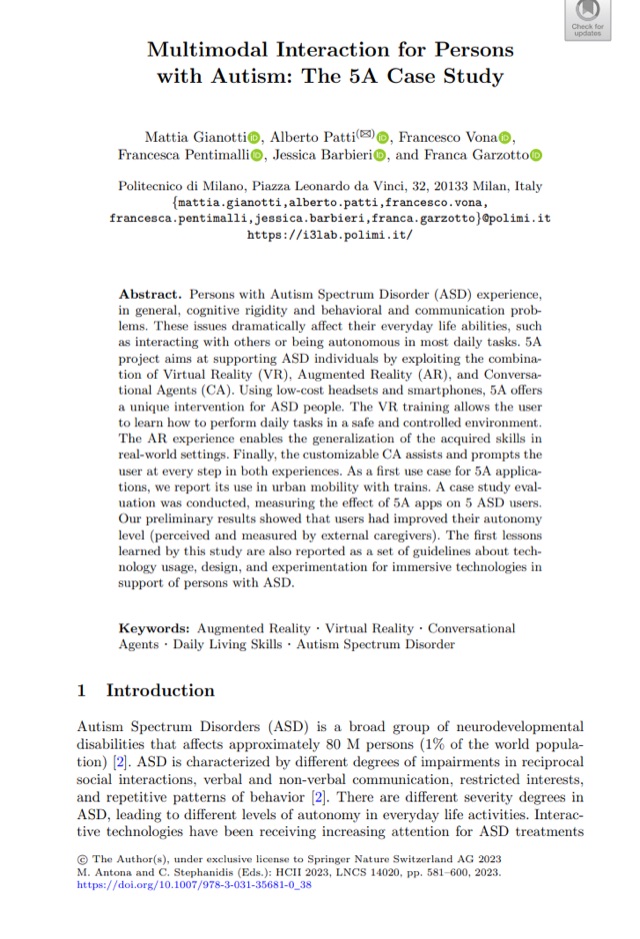 Multimodal interaction for persons with autism: The 5A case study
 Using HoloLens Mixed Reality to research correlations between language and movement: a case study
 Improving the daily autonomy of people with Autism Spectrum Disorder through Virtual and Augmented Reality
 Shared boundary interfaces: can one fit all? A controlled study on virtual reality vs touch-screen interfaces on persons with neurodevelopmental disorders
 Computergestützte, bilinguale Screenings: Risikoidentifikation von LRS und SES bei zweisprachigen Kindern mit der modifizierbaren Web-App MuLiMi
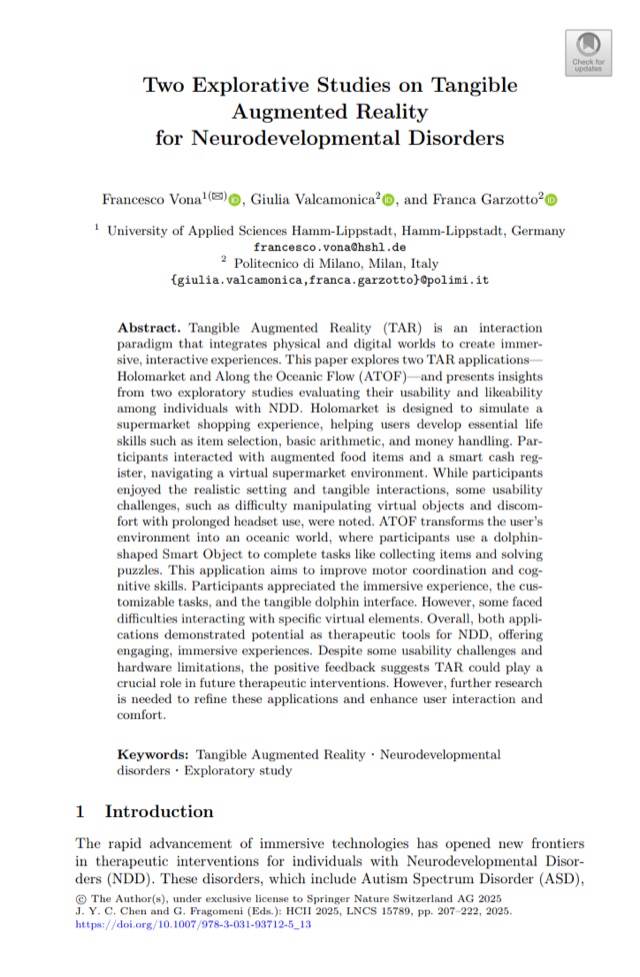 Two Explorative Studies on Tangible Augmented Reality for Neurodevelopmental Disorders
 Hololimb: Mixed Reality to Alleviate Phantom Upper Limb Pain
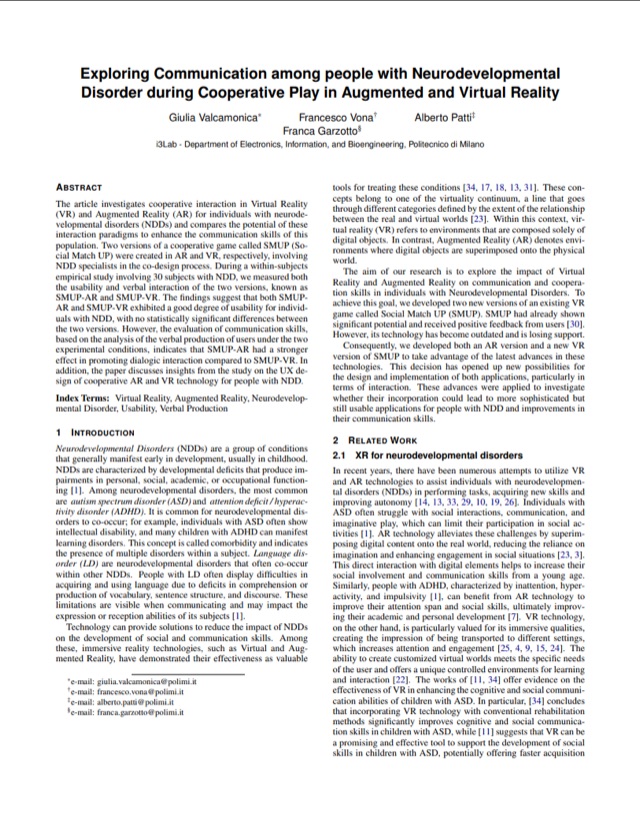 Exploring Communication among People with Neurodevelopmental Disorder during Cooperative Play in Augmented and Virtual Reality
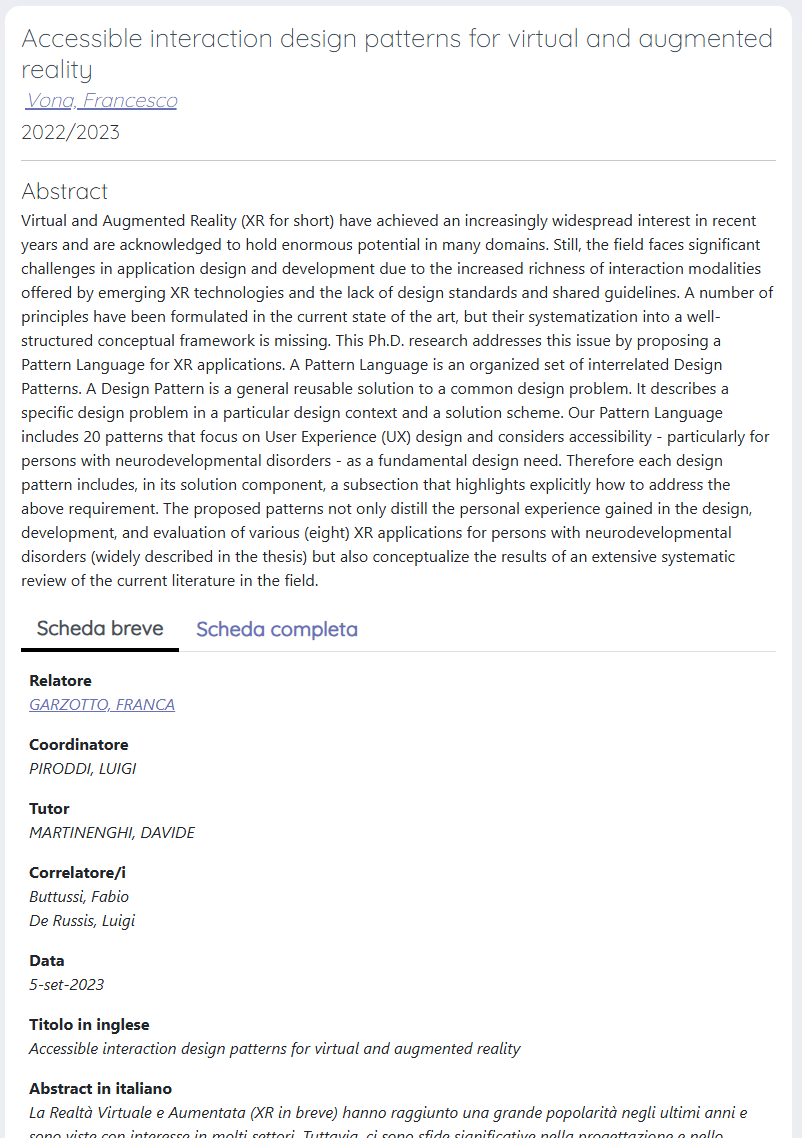 Accessible interaction design patterns for virtual and augmented reality
 Improving trust in smart logistics with blockchain: an explorative study