Mobil im Havelland
Digital health research to enhance mobility and participation in rural ageing populations
Especially in rural areas, the integration of resources from health services and from personal care networks is crucial for maintaining mobility and autonomy in old age and thus for ensuring effective healthcare. A precise analysis of these resources is therefore essential for improving care and preserving mobility into advanced age. Objective: The overarching goal of the planned junior research group of young scientists is to strengthen gerontological healthcare research and to integrate social gerontology into the geriatric-gerontological research of Charité, thereby establishing it more firmly. Through cooperation with the Havelland Clinics, the junior research group will investigate the research structures in rural areas. The junior group and the study are funded by the Federal Ministry of Education and Research (BMBF) within the framework of the directive to strengthen research in geriatrics and gerontology. The planned MOBILE study, conducted by the junior research group, targets resources on three levels of healthcare – environmental, social, and personal. Integrating these resources is crucial for maintaining mobility and autonomy in old age and for ensuring effective healthcare, especially in rural areas. The aim of this research project is to identify healthcare and personal network resources across different spatial resolutions – environmental, social, and personal – in a rural region (Research Question 1) and to test whether a tablet-supported health intervention is effective in enabling mobility and participation (Research Question 2). To answer the research questions, a two-arm, pragmatic, randomized controlled trial (RCT) with 254 very old individuals from rural and small-town areas of the Havelland region will be conducted. The primary endpoint will be objectively measured mobility (via GPS tracking). Novel aspects of the project include the systemic multi-level resource approach, the application of innovative technologies, and the adaptation of individual needs to the available care options within a theory-driven framework. The ecological approach ensures simple implementation and sustainability, maximizing benefits for people in the region.
- Funders Federal Ministry of Education and Research (BMBF)
- Duration 04/2018–06/2021
Funding

Partners


Team
- Prof. Dr.-Ing. Jan-Niklas Voigt-Antons
Project Lead
Inside the application
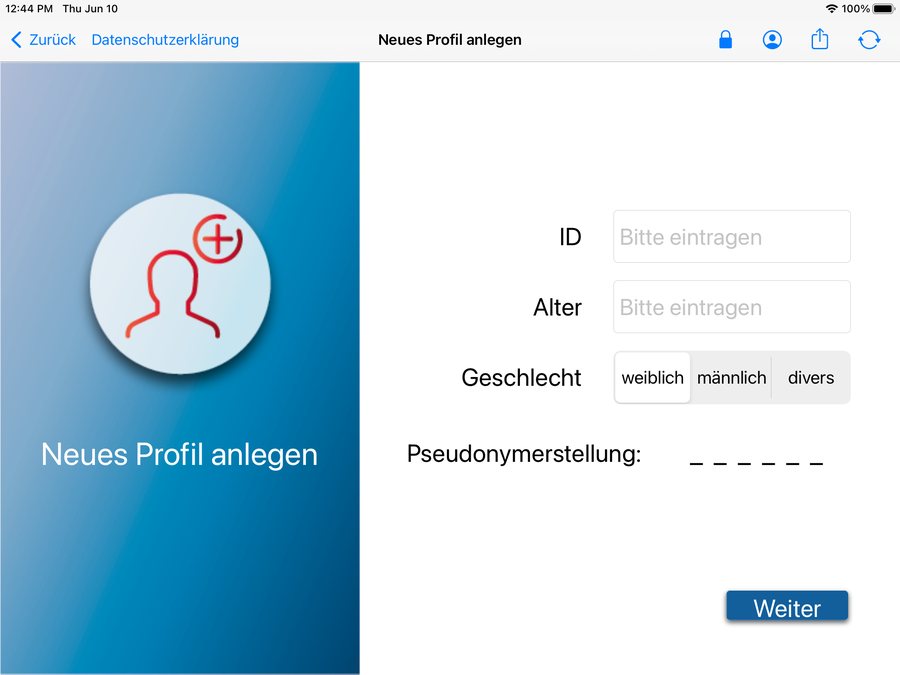
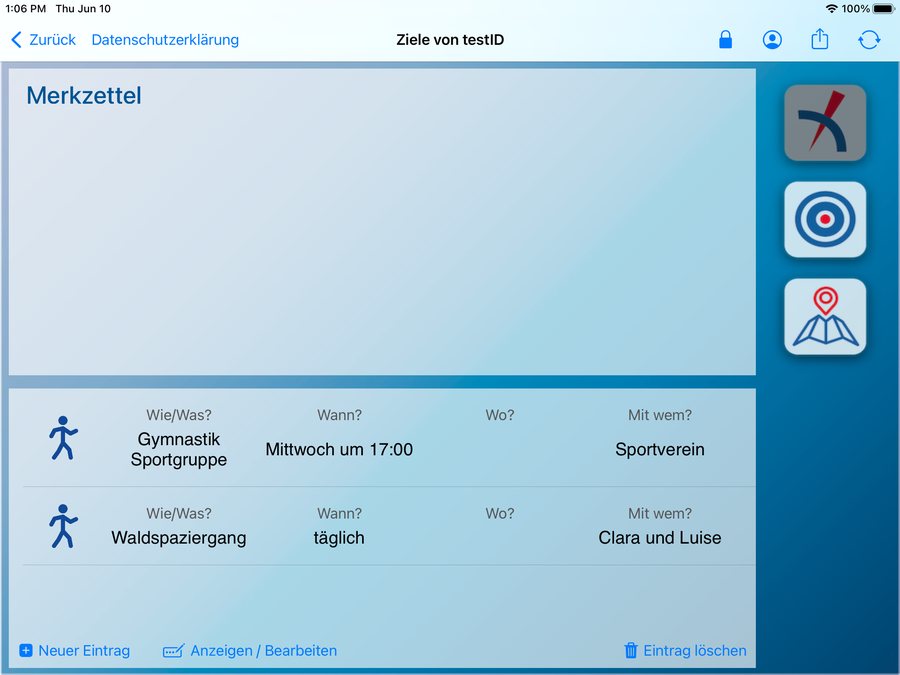
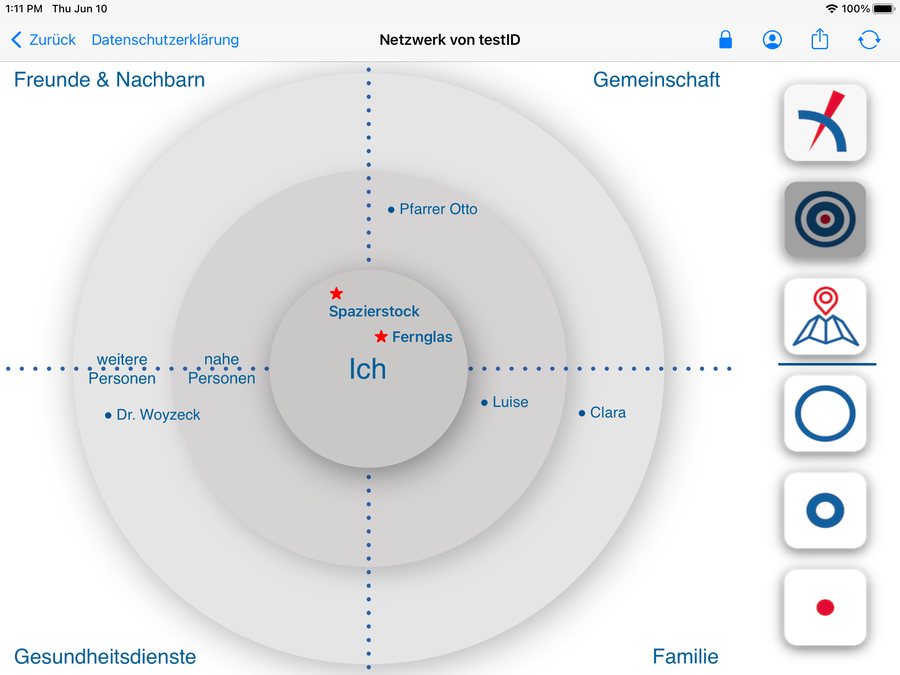
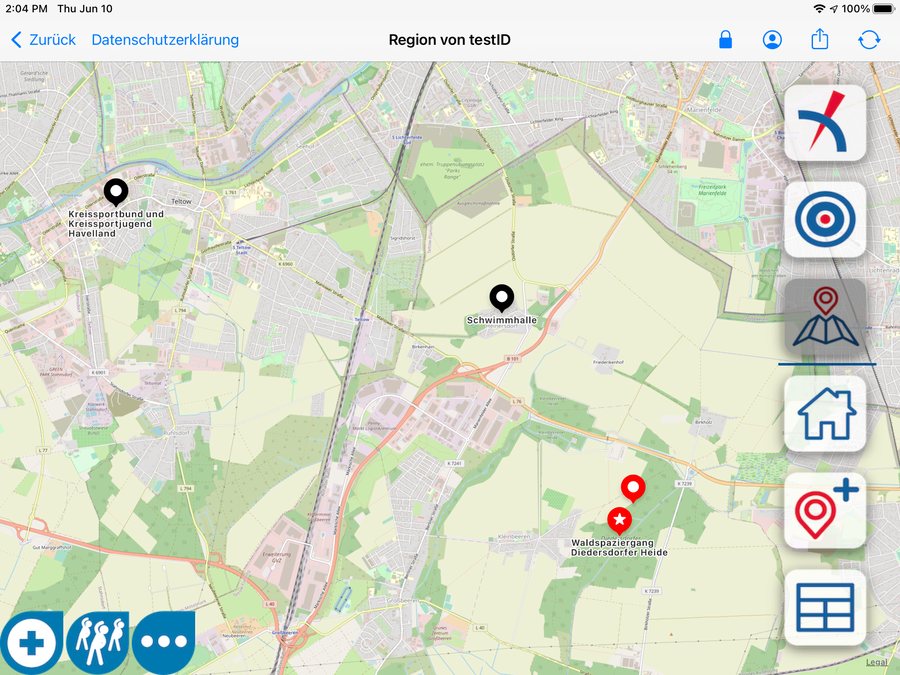
Each participant gets their own profile. Goals are discussed together and tied to places they want to reach. The network view brings personal, social and regional resources into one picture, and a map shows what the region already offers — which is the point in rural areas, where the distance between a need and an offer decides whether someone stays mobile.