Comparing robot, avatar, and voice assistance in PROMIS administration – a cross-randomized controlled trial
Marquardt, M., Ashrafi, N., Balcerek, M., Compagna, D., Graf, P., Harnisch, P., Hillmann, S., Köllner, V., Papst, L., Voigt-Antons, J.-N., Zöllick, J. & Fischer, Felix
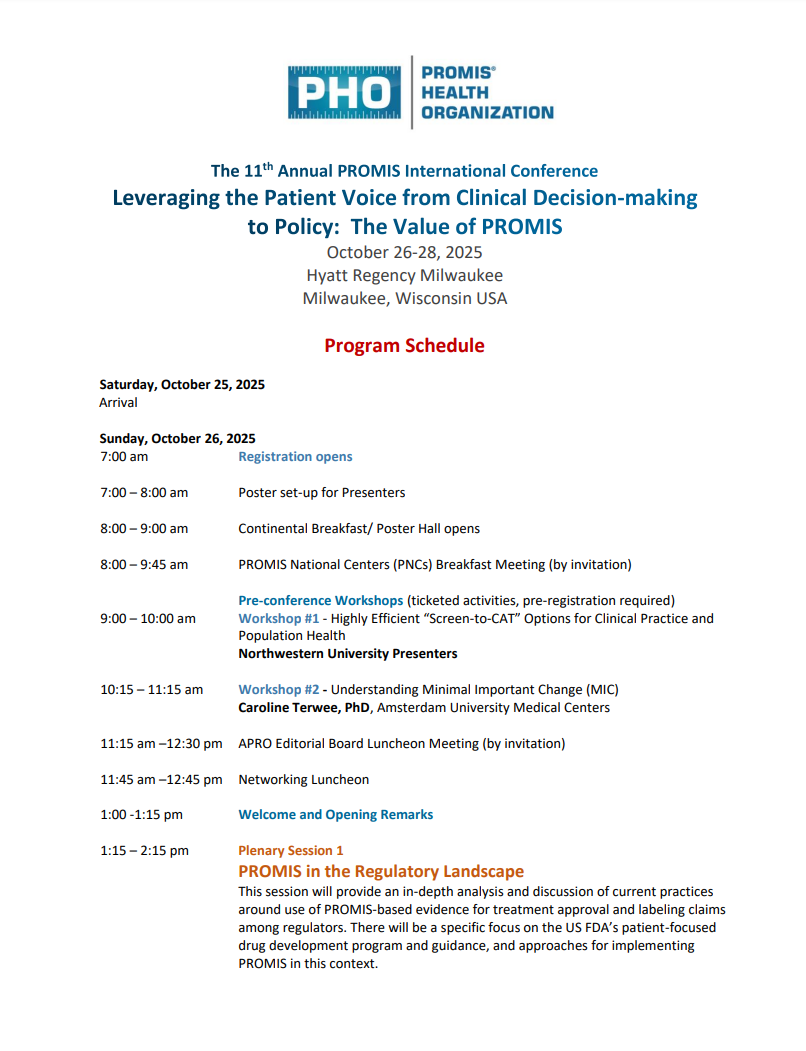
Paper presented at the 11th Annual PROMIS International Conference (PROMIS 2025), Milwaukee, Wisconsin, USA, October 2025
Abstract
Objective: Patient-reported outcomes measures (PROMs) are increasingly used to monitor quality of care, but completing these questionnaires can be burdensome—especially for patients with reading or motor impairments (e.g. after a stroke) or concentration difficulties (e.g. when suffering from depression). However, their underrepresentation in PRO data bears risk of nonresponse-bias. Therefore, a multimodal assistance system was developed and evaluated within a participatory-interdisciplinary research network. The system reads instructions and questions aloud, paraphrases in simplified language, and accepts voice or touch responses. Methods: In a cross-RCT, outpatients in psychosomatic and neurological rehabilitation were randomly assigned to one of three assistance systems: a robot (Furhat Robotics, embodied robotic head with lip-sync, idle movements, and eye contact), a digital avatar (on-screen agent on separate tablet with lip-sync and idle movement), or voice-only (audio output via questionnaire tablet without visual agent). Nine PROMIS domains (physical function, fatigue, sleep disturbance, pain interference, cognitive function abilities, anxiety, depression, self-efficacy in managing emotions, and ability to participate in social roles and activities) were assessed by 72 items. Participants completed 4 items per domain via standard tablet and 4 via their assigned assistant, in random order. Differences between assisted and standard assessment on a group level using a linear mixed model and Bland-Altman plots for agreement were investigated. Results: Ninety-eight patients were randomized; 3 were excluded post-randomization due to technical issues. The remaining 95 were analyzed (33 robot, 30 avatar, 32 voice-only). Sixty-five were psychosomatic patients (67.7% female, mean age=47.0 years, range=22–65; most common diagnoses: depression, anxiety) and 30 were neurological patients (36.7% female, mean age=52.3 years, range=22–74; most common diagnosis: post-stroke). Across all domains, mean scores did not differ significantly between assisted and standard assessment, with a mean difference <1 PROMIS T-Score. We found neither significant nor relevant differences between assistance modes. Conclusions: Our results indicate that robot-, avatar-, and voice-administered PROMs yield comparable results to standard tablet-based assessments. These findings suggest that assistive technologies may offer a feasible way to improve accessibility without affecting data integrity. Future studies will build on current findings by addressing specific patient barriers and exploring broader applicability and transfer.
Cite as
Marquardt, M., Ashrafi, N., Balcerek, M., Compagna, D., Graf, P., Harnisch, P., Hillmann, S., Köllner, V., Papst, L., Voigt-Antons, J.-N., Zöllick, J. & Fischer, Felix (2025, October). Comparing robot, avatar, and voice assistance in PROMIS administration – a cross-randomized controlled trial. Paper presented at the 11th Annual PROMIS International Conference (PROMIS 2025). Milwaukee, Wisconsin USA.